

Town water in Wellington, the Hutt Valley, Porirua and the Kāpiti Coast is treated and monitored, and Taumata Arowai regulates drinking water suppliers nationally. Plenty of households still choose to filter it, usually to change the taste or smell, catch sediment after nearby mains work, or simply give the family water they enjoy drinking. On tank and bore supplies, filtration is about safety as much as taste. We supply and install water filters for Wellington homes, from a single under-sink filter for the kitchen tap to a whole-house system on the main line, and we fit the replacement cartridges when they fall due.
We start with where your water comes from and what you want to change, then recommend the simplest system that does the job. No sales pitch for equipment you do not need.
Pricing: quotes are free, and every job gets a fixed price before we start, so there are no surprises on the invoice.
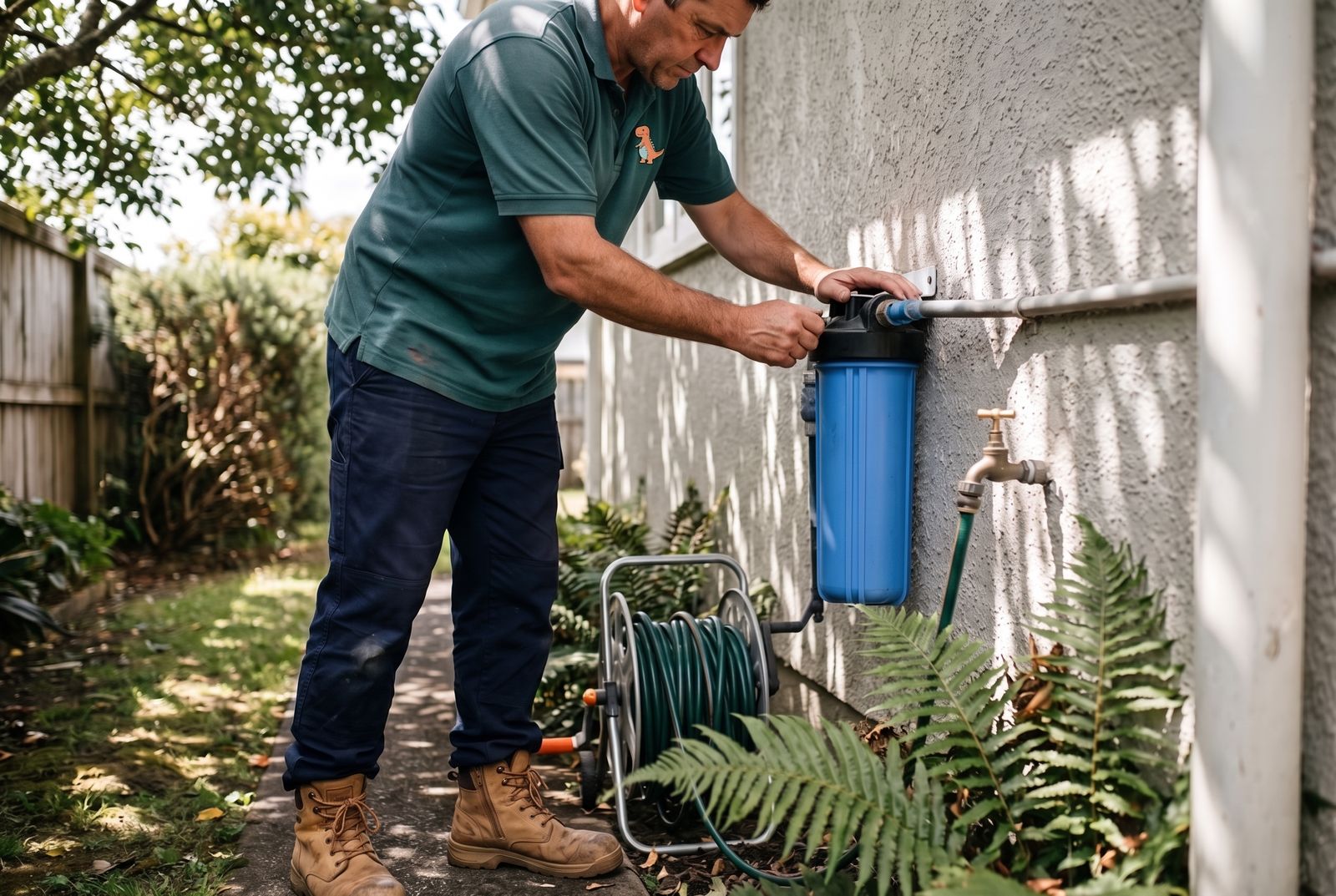
Water Filters Jobs We Handle Across Wellington
- Under sink water filters
- Whole house water filters
- UV water treatment
- Tank water filtration
- Cartridge replacements
- Filter low pressure fixes
Where Wellington's water comes from
Most of the region is supplied by Tiaki Wai, formerly Wellington Water, from three sources: the Hutt River, taken at Kaitoke and treated at Te Mārua; the Wainuiomata and Orongorongo rivers, treated at Wainuiomata; and the Waiwhetū Aquifer under the Hutt Valley. Together they supply more than 160 million litres a day to Wellington, Lower Hutt, Upper Hutt and Porirua. Tiaki Wai notes that treatment adjusts the pH to reduce corrosion of pipework.
The Kāpiti Coast is different. Kāpiti Coast District Council runs its own water. Waikanae, Paraparaumu and Raumati share a supply drawn from the Waikanae River and topped up from a borefield in dry summers, and Ōtaki is supplied from groundwater bores. Different sources can taste different, which is one reason people in different parts of the region ask for different filters.
Do you need a filter on town water?
For safety, generally not. Network water is treated before it reaches you. For taste, smell and comfort, a filter often makes a noticeable difference, and a sediment stage helps after mains repairs stir up the pipes in your street.
Hardness is not an issue on most of the network. Tiaki Wai describes the supply to Wellington, the Hutt and Porirua as soft, with measured hardness well under 100 mg/L of calcium carbonate. That means a water softener is rarely worth buying here, and we will not recommend one unless your supply genuinely needs it. If your concern is rust-coloured water from your own taps, the problem is more likely old galvanised pipe inside the house than the supply.
How It Works
Types of filtration we install
The right system depends on your water source and what you want to remove:
- Under-sink carbon filters with a separate drinking tap, for taste and smell
- Whole-house sediment and carbon filters, so every tap and shower is filtered
- Reverse osmosis units for the lowest dissolved solids at one drinking tap
- UV sterilisers for tank and bore water, to treat bacteria and protozoa
- Sediment pre-filters to protect pumps, valves and appliances
Tank and bore water need a different approach
Some rural and lifestyle properties around the region, such as the market garden and lifestyle blocks near Ōtaki, rely on rainwater tanks or a private bore rather than a council supply. That water has not been treated, so filtration is part of making it safe. Taumata Arowai's acceptable solution for roof water supplies and BRANZ guidance both describe staged treatment: first-flush diversion, fine filtration and UV disinfection.
We set those systems up in the right order, with a sediment filter ahead of the UV lamp so the light can reach the water, and a clear schedule for changing cartridges and lamps. Sludge in the tank shortens cartridge life, so periodic water tank cleaning helps too. If you are adding or replacing a tank, see our rainwater tanks page.
What affects the cost
Larger systems cost more depending on:
- Under-sink or whole-house installation
- The number of filter stages and the cartridge type
- Whether UV or reverse osmosis is needed
- Access to the incoming supply, which can be under a low subfloor on a hill site
- Whether a power point is needed for a UV unit
Keeping your system working
A filter that is never changed can end up worse than no filter, because a clogged cartridge restricts flow and can harbour bacteria. Most household cartridges need replacing somewhere between every six and twelve months, depending on the cartridge and how much water you use. UV lamps are typically replaced every year.
We record your cartridge types and install date, and remind you when replacements are due. If the pressure has dropped since the filter went in, a blocked cartridge is the first thing to check. If it is not the filter, our low water pressure service can track down the real cause.
Why Choose Cheeky's Plumbers for Water Filters
Matched to your supply
Tiaki Wai network, Kāpiti council supply, tank or bore: we start with the source and recommend the simplest system that does the job.
Certificates actually checked
Where a filter carries NSF/ANSI certification, we check the certificate lists the contaminants you care about.
Staged treatment for tank water
On tank and bore supplies we fit sediment filtration ahead of UV, in line with Taumata Arowai's acceptable solution for roof water.
No softener upsell
Network water here is soft, so we rarely recommend a softener unless your supply genuinely needs one.
Cartridge reminders
We note your cartridge types and install date and remind you when they are due.
Water Filters FAQs
Is Wellington tap water safe to drink?
Network water is treated before it reaches you, and Taumata Arowai regulates drinking water suppliers. Filtration on town supply is mainly about taste, smell and sediment.
Do I need a water softener in Wellington?
Usually not. Tiaki Wai measures the supply to Wellington, the Hutt and Porirua as soft. We only suggest scale control where a supply genuinely needs it.
How often do filter cartridges need changing?
Typically every six to twelve months, depending on the cartridge and your water use. UV lamps are usually replaced yearly.
Can you make tank water safe to drink?
Yes, with the right mix of first-flush diversion, filtration and UV treatment, plus regular maintenance and testing.
Will a whole-house filter lower my water pressure?
A correctly sized system has little effect. A pressure drop usually means a cartridge is due for replacement.
What does NSF certification mean?
The filter has been independently tested to reduce specific contaminants under an NSF/ANSI standard. Always check which contaminants are listed.
Water Filters Near You
Find your suburb for local water filters information, response times and nearby areas.
Water Filters Guides
Related Services
Water Tanks
Rainwater tank installation, pump setup and maintenance for rural and urban properties across the Wellington region.
View serviceWater Pumps
Pressure pumps, tank pumps, bore pumps and sump pumps supplied, installed and repaired.
View servicePressure Reducing Valves
Mains pressure in some streets can be high enough to damage tapware, burst flexi hoses and wear out cylinders early.
View serviceIrrigation
Drip lines, sprinklers and smart controllers designed for your section and plumbed in by licensed plumbers, with the right backflow protection for a garden irrigation supply.
View serviceBlocked Drains
Blocked sinks, showers, toilets and gully traps cleared fast.
View serviceHot Water Cylinders
Hot water cylinder replacement across Wellington.
View serviceSources and further reading
- Tiaki Wai: Water supply
- Tiaki Wai: Hard or soft water
- Kāpiti Coast District Council: Waikanae River recharge and borefield annual report
- Kāpiti Coast District Council: Keeping Ōtaki's drinking water safe and reliable
- Taumata Arowai: Acceptable solution for roof water supplies
- BRANZ: Collecting drinking water from roofs
- Ferguson: Water filter certification guide (NSF/ANSI 42, 53, 58)