
Once everyone is safe, check for the smell or hiss of gas, look for water leaks, and do not flush toilets until you know the wastewater pipes are intact. WREMO's advice after a large quake is not to flush at all. Then photograph any damage, contact your insurer, and get a camera check of your drains if you live on soft ground such as Petone, the Hutt Valley floor or the Kilbirnie flats.
Wellington sits on the Wellington Fault, which runs from Cook Strait through the city and up the Hutt Valley, and a rupture is expected to produce an earthquake of about magnitude 7.5. GNS has counted about 50 active faults across the region. Most quakes are small, but any strong shake is a good prompt to check the pipes, drains and gas lines you cannot see.
This is a plumber's checklist for the hours and weeks afterwards. It does not replace civil defence advice. If the shaking was long or strong and you are in a tsunami zone, move to high ground first, because WREMO warns a local tsunami could arrive in as little as 10 minutes.
Should I turn off the gas after an earthquake?
Only if you smell gas, hear a hissing or blowing noise, or are told to. The national Get Ready guidance is to turn off water, electricity and gas if advised to, and if you smell gas or hear that hiss, to open a window, get everyone out quickly and turn off the gas if you can.
Shutting gas off when nothing is leaking causes its own trouble, because every appliance then has to be relit and checked. Natural gas is piped by Powerco across Wellington, the Hutt Valley and Porirua, and the shut-off is the valve at the meter. On LPG it is the valve on the bottle. Find yours now, before you need it.
If you did smell gas, do not turn it back on yourself. Our gas leak repairs team can test the installation, find the leak and make it safe before anything is relit.
- Do not use light switches, matches or lighters inside if you smell gas.
- Once everyone is outside, call your gas supplier's emergency number, or 111 if the smell is strong.
- Leave the gas off until a gasfitter has found and fixed the leak.
How do I know if my drains were damaged?
Look for slow or gurgling fixtures, a sewage smell outside, new hollows or soft ground along a drain line, and water around the gully trap. Many cracked pipes show nothing at first, which is why a camera is the only sure check.
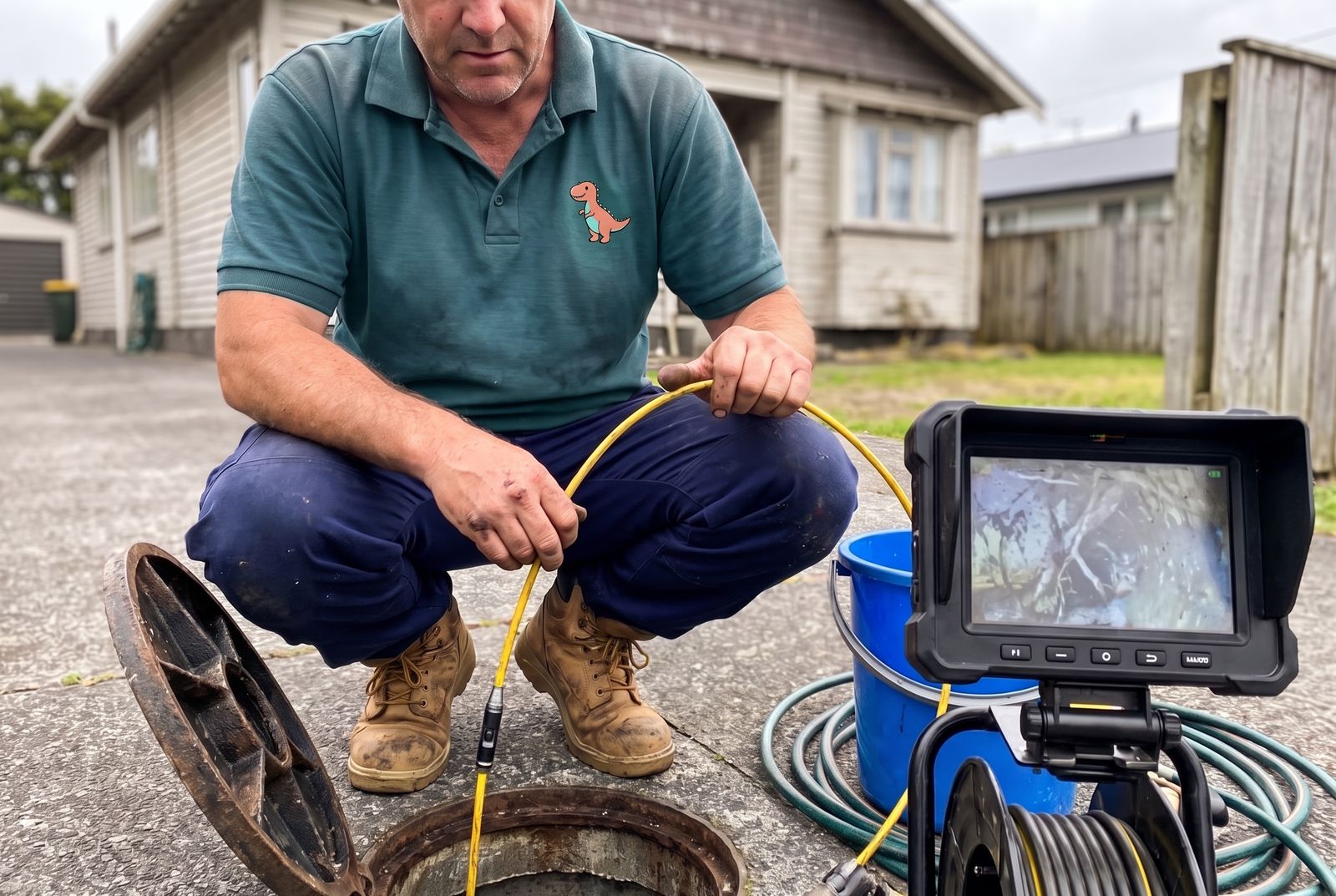
A CCTV drain inspection sends a camera through the pipe from an inspection point and records cracks, offset joints and breaks. The footage tells you whether a drain repair is needed or whether the pipe came through intact, and it is useful evidence for an insurance claim.
Know which part is yours. In Hutt City the owner owns the wastewater lateral all the way to the council main, while in Wellington City the council looks after the part under the road and the owner looks after the rest. Cheeky's Plumbers can show you on the footage where your section ends.
- Toilets, showers or sinks that drain slowly or bubble.
- Water or sewage around the gully trap.
- New hollows, cracks or soft spots in the lawn or driveway.
- A sewage smell that was not there before the quake.
- Stormwater pooling where it used to drain away.
Is it safe to flush the toilet after a big quake?
Not straight away. WREMO's advice after a large earthquake is simple: don't flush. It warns that even if the water is still running, the wastewater pipes are likely to be broken, and flushing can push sewage out into your section or the street.
WREMO asks households to be ready to manage without a normal toilet for at least 30 days after a major quake, using a long drop or a two-bucket toilet, and some parts of the region could need longer. After a small quake that clearly did no damage, normal use is fine. If you see any of the drain warning signs above, stop flushing and get the drain checked.
The same thinking applies to sinks, showers and the washing machine. They all drain into the same wastewater pipe, so if the toilet should not be flushed, the rest of the house should go easy on the drains too.
Worried about your drains after a quake?
Cheeky's Plumbers can run a camera through your drains, show you the footage and give you a report to send to your insurer.
Who covers pipe damage: my insurer or the Natural Hazards Commission?
Both can be involved, and you start with your insurer either way. The Natural Hazards Commission (formerly EQC) covers earthquake damage to your home, including some essential services that serve it, such as water supply, drainage, sewerage and gas. It generally pays up to the first $300,000 plus GST, and private insurance covers the rest.
Insurers assess and manage claims on the commission's behalf, so lodge the claim with your insurer as soon as you can. Land cover is separate and limited: it covers land under and within 8 metres of the home, the main accessway up to 60 metres, and some retaining walls, up to a cap.
Make the repairs needed to stop further damage, such as capping a broken pipe, and keep the invoices. Check with your insurer before starting permanent repairs. Useful evidence includes:
- Date-stamped photos of cracks, wet patches and damaged fittings.
- CCTV footage and the written drain report.
- Plumber invoices for any emergency repairs.
- Notes of when you first noticed each problem.
Why do homes on soft ground like Petone and Kilbirnie need a drain check?
Because soft ground moves more in a strong quake, and buried pipes move with it. A 1993 study of the Hutt Valley placed Petone, Seaview and Gracefield among areas with liquefaction potential, and research shows shaking gets stronger from Haywards towards the Petone foreshore on the deep, soft sediment of the valley floor.
Petone sits on young, relatively soft sediment, typically less than 5 metres above sea level, and Naenae lies over loose silt and peat. Across the harbour, Kilbirnie and Lyall Bay are on the Rongotai isthmus, land raised from the sea by an earthquake around 1460, and the eastern side of Lyall Bay was sand dunes capped with clay from 1925. Wellington City's District Plan includes a Liquefaction Hazard Overlay built from GNS data.
None of this means your drains will fail. It means they can shift, joints can open and a pipe can lose its fall, and on soft ground that damage is harder to see from the surface. Our plumbers in the Hutt Valley and in the eastern and southern suburbs can run a camera through after a big shake so you know where you stand.
What can I do now to make my plumbing quake-ready?
Most of the work is small. Restrain the hot water cylinder, fit flexible connections where rigid pipes meet appliances, learn where the toby and gas shut-off are, and store water for the household.
Cheeky's Plumbers can check all of these in one visit and tell you which matter most for your house. You can book online at a time that suits.
- Check the hot water cylinder has seismic straps fixed into the wall framing.
- Ask about flexible connectors on the cylinder and gas appliances.
- Label the toby and the gas meter valve so anyone in the house can find them.
- Store drinking water, and plan for an emergency toilet as WREMO suggests.
- Keep the drain inspection points clear so a camera can get in quickly.
Frequently Asked Questions
How soon after an earthquake should I get my drains checked?
Once the immediate danger has passed and aftershocks have settled. If sewage is overflowing or toilets will not drain, get help straight away. Early footage also helps link damage to a particular quake when you make an insurance claim.
Can aftershocks cause new pipe damage?
Yes. A pipe weakened in the main quake can crack further in a strong aftershock. If your drains were checked early and there are more big shakes, it can be worth re-checking any sections that showed minor damage.
Should I turn off the water at the toby after a quake?
Only if you find a leak you cannot isolate, or if you are told to. If a pipe is broken, closing the toby stops water damage and saves water that may be scarce while the network is repaired.
My gas appliances will not light after a quake. What should I do?
Do not keep trying. The supply may have been shut off at the meter or on the network, or an appliance may have been knocked out of place. Get a gasfitter to check the installation and relight it safely.
Does the Natural Hazards Commission cover a cracked drain on my property?
It can. Its home cover includes some essential services that serve the home, such as drainage and sewerage, for natural hazard damage. Your insurer manages the claim, so contact them with photos and any CCTV report.
Our Services
CCTV Drain Inspection
Our waterproof drain cameras show exactly what is happening inside your pipes: roots, cracks, sags, collapsed sections and illegal connections.
View service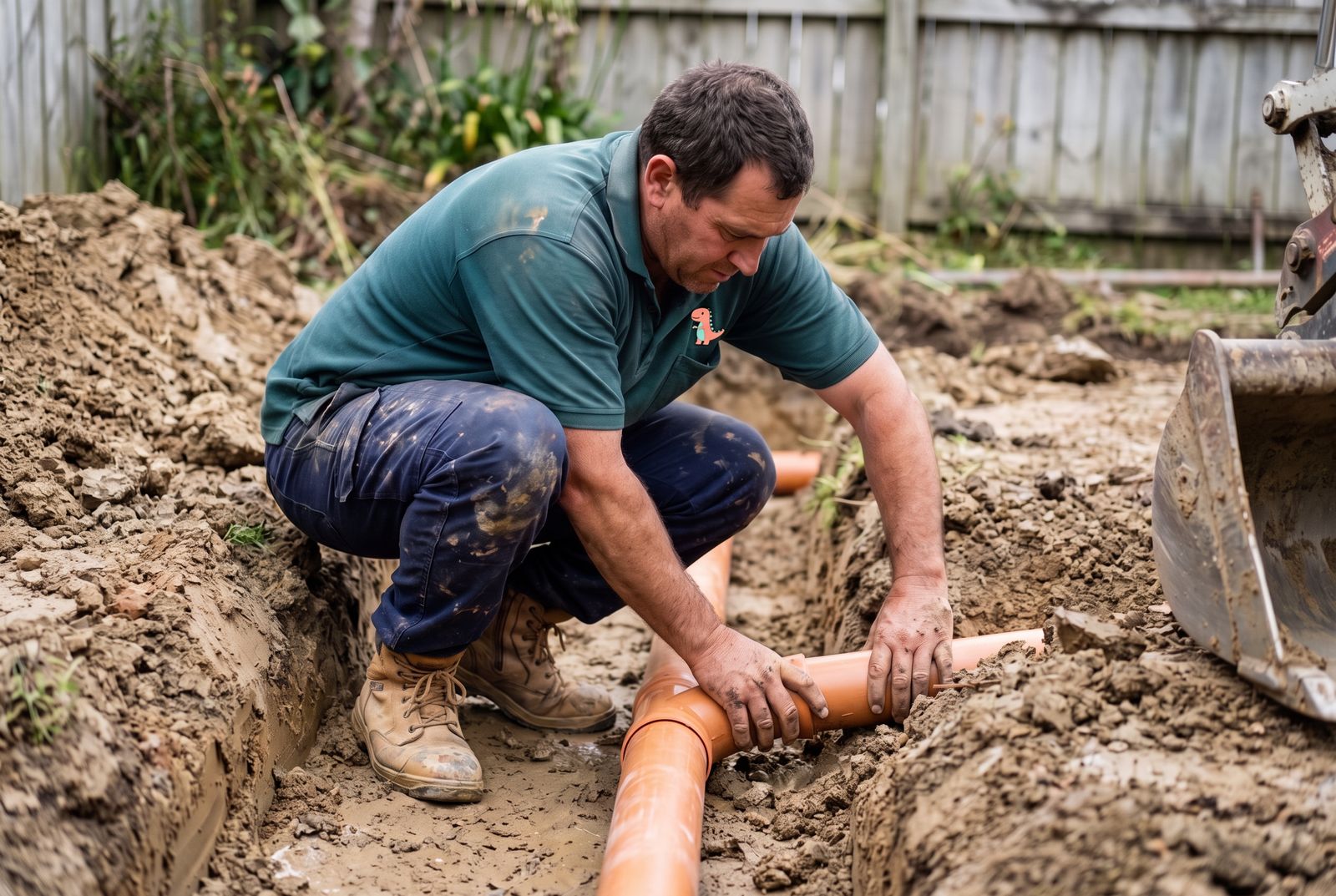
Drain Repairs
Cracked, collapsed and root-damaged drains repaired by registered drainlayers.
View service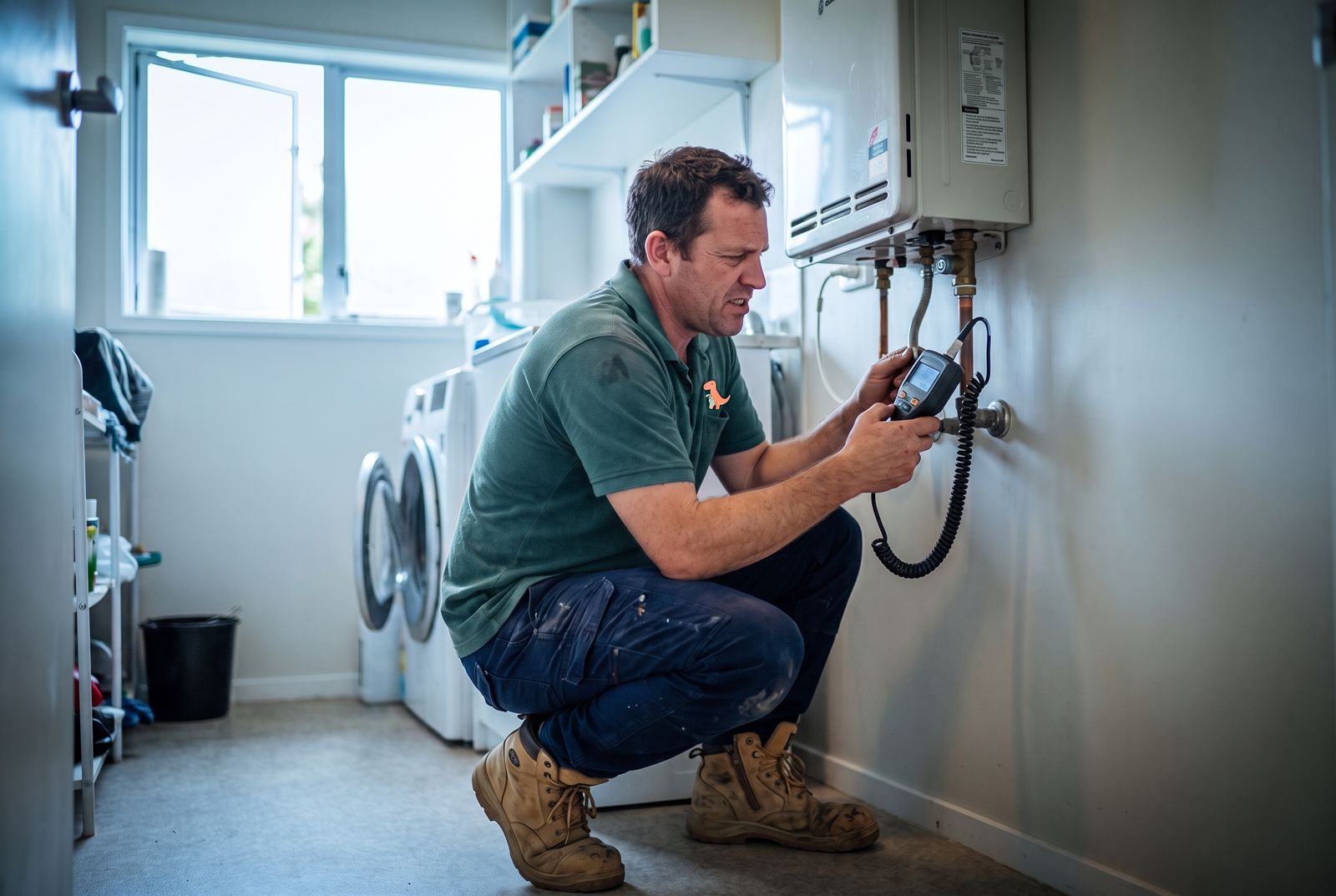
Gas Leak Repairs
If you smell gas, leave the building, do not use switches, and call us from outside.
View serviceRead Next
Emergency Water Storage for Wellington Homes: How Much and Where to Keep It
WREMO, the Wellington region's emergency management office, says every household needs its own water for at least seven...
Read article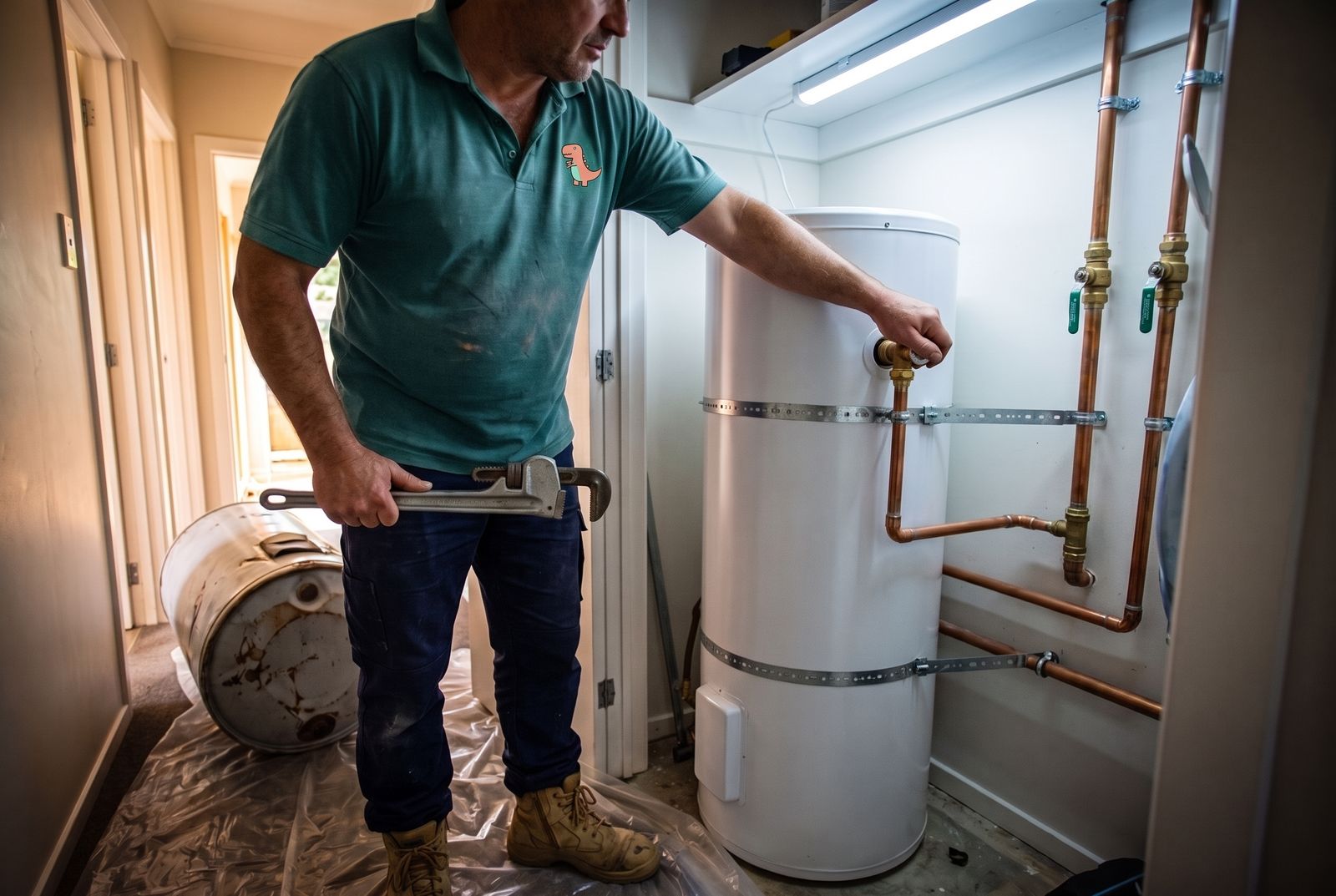
Hot Water Cylinder Seismic Restraints: Is Yours Ready for a Wellington Quake?
Yes. Under the Building Code, a storage hot water cylinder has to be held against earthquake movement, and Acceptable...
Read article
Stormwater on a Steep Wellington Section: Downpipes, Retaining Walls and Slips
On a steep Wellington section, roof water and the drainage behind retaining walls should be piped to the stormwater...
Read articleSources
More plumbing advice from the Cheeky's Plumbers team.
