
WREMO, the Wellington region's emergency management office, says every household needs its own water for at least seven days, because official water stations could take around eight days to set up. The bare minimum is 3 litres per person per day; the fuller recommendation is 20 litres per person per day, or 140 litres each. A 200 litre tank on a downpipe plus stored bottles covers most homes.
In most cities emergency water is something people mean to sort out one day. In Wellington it is a practical plumbing job, because the region's supply pipes cross active faults and a big quake could cut water to whole suburbs for days.
This guide covers how much to store, how long it keeps, and the plumber's side of the job: connecting a tank to a downpipe without causing a new problem, and placing it safely on a steep section.
Why does Wellington need emergency water?
Because the pipes that bring water into the city cross earthquake faults, and WREMO warns that ground movement in a major quake could severely damage them.
The Wellington Fault runs from Cook Strait through Karori and the city and along the Hutt Valley, and a rupture is expected to produce an earthquake of about magnitude 7.5. GNS research puts the number of active faults in the region at about 50, many capable of damaging earthquakes.
Water reaches the four cities from the Hutt River at Kaitoke, the Wainuiomata and Orongorongo rivers, and the Waiwhetū Aquifer under the Hutt Valley, then travels through about 2,543 km of pipe. A break anywhere along those routes can leave homes without water, which is why WREMO tells households to plan to look after themselves for the first week.
How much emergency water should a Wellington household store?
WREMO's minimum is 3 litres of clean drinking water per person per day for seven days, which is 21 litres each. That covers drinking, cooking and very basic hygiene only.
Its fuller recommendation is about 20 litres per person per day for seven days, or 140 litres each, enough to wash, flush and look after pets as well. For a family of four that is 560 litres. Pets, young children, nursing mothers and anyone unwell may need more.
Most households combine two stores: bottles or containers inside for drinking, and a larger tank outside for washing and flushing. A typical 200 litre emergency tank holds more than the minimum for a family of four, but only part of the fuller recommendation.
| Household size | Minimum for 7 days (3 L a day) | Recommended for 7 days (20 L a day) |
|---|---|---|
| 1 person | 21 litres | 140 litres |
| 2 people | 42 litres | 280 litres |
| 4 people | 84 litres | 560 litres |
| 6 people | 126 litres | 840 litres |
How long can stored water be kept?
WREMO says to clean and refill stored bottles every six months, and to write the fill date on each container so you know when it is due.
Store containers in a cool, dark place out of direct sunlight. Before drinking stored water, hold it to the light. If it is cloudy or has anything floating in it, strain it and boil it for one minute, or treat it with plain, unscented household bleach: WREMO's dose is half a teaspoon (2.5 ml) per 10 litres, left to stand for 30 minutes. Do not use a bleach with added detergents, such as Janola.
A rain-fed tank refreshes itself every time it rains, but it collects whatever is on the roof and in the spouting. That is why tank water should be treated before drinking and why the tank needs cleaning out from time to time. Sediment builds up in the bottom, and our water tank cleaning service removes it without contaminating the inlet.
Want a tank fitted properly?
Cheeky's Plumbers can connect an emergency tank to a downpipe with a diverter and overflow to stormwater, and check your cylinder is secured.
Can an emergency tank be connected to a downpipe?
Yes, and that is how WREMO shows its 200 litre household tank: fed from a downpipe at the side of the house. The plumbing detail is what makes it work in heavy Wellington rain.
A tank on a downpipe needs a diverter or rain head that sends water into the tank and lets the rest carry on down the pipe once the tank is full. Without one, the overflow spills next to the house, and on a sloping section that water ends up against the foundations or down a bank. The overflow should always go back to the stormwater system.
Fit a leaf screen at the inlet and a mesh over any opening so mosquitoes and debris stay out. Choose a downpipe from a clean part of the roof, away from overhanging trees and bird roosts.
Check the spouting before you connect anything. If it sags, leaks at the joints or is blocked, the tank will fill slowly and the overflow will go in the wrong place. Our spouting and roof plumbing team can repair the run and fit the diverter in one visit.
Where should a tank go on a sloping section?
On firm, level, well-drained ground, close to a downpipe, and away from the top or toe of a bank. Water is heavy: a full 200 litre tank weighs about 200 kg, and a larger tank many times that.
Many Wellington homes have no flat spot at all. In Brooklyn and Kelburn, sections climb steeply from the street, and in Churton Park houses sit on cut and fill hill country. In those cases a small concrete pad or a properly built platform gives the tank a level base. Do not stand a tank on loose fill at the edge of a cut, and do not let its overflow discharge onto a bank. GeoNet linked many of the 2022 Wellington slips to saturated soil, and older cut slopes appear more prone to failure.
Secure the tank so it cannot topple in a quake. Strapping it to a solid wall or posts is a simple step for a slim tank.
Most domestic tanks do not need building consent. Building Act exemptions cover a tank of up to 35,000 litres supported directly by the ground, but a tank raised on a high stand may need consent, and district plan rules can still apply. Check with your council if in doubt. Our plumber Western and Northern Suburbs page covers Churton Park, Khandallah, Ngaio and Karori.
Is it legal to collect rainwater in NZ?
Yes. Collecting rainwater from your own roof for household use is legal, and Greater Wellington Regional Council encourages it, provided the collection and storage meet the Building Code and local bylaws.
The rules mainly bite when a tank connects to the house plumbing. A tank that feeds toilets, laundry or garden taps through a pump, especially one that also has a mains top-up, needs backflow protection so tank water cannot flow back into the public supply. Kāpiti Coast District Council notes that homes with two water sources may need extra backflow protection.
A standalone emergency tank with its own outlet tap is the simplest setup. If you want something bigger that also supplies the toilet or the garden, our rainwater tanks service can size it and plumb it in correctly.
Can the water in my hot water cylinder be used in an emergency?
Yes. WREMO lists the hot water cylinder and the toilet cistern as valuable sources of water after a disaster. Cistern water is only safe if no chemical toilet cleaner has been used in it.
To use cylinder water safely, first switch off the power or gas to the cylinder so the element or burner cannot run on an empty tank. Close the cold water inlet valve so dirty mains water cannot be drawn in, let the water cool, then draw it off from the drain valve near the base or the lowest hot tap. Treat it like any stored water before drinking.
The cylinder is only useful if it is still standing. WREMO's advice is to check that your hot water cylinder and any header tank are well secured. If yours is held only by its pipes, or the straps are loose or rusted, Cheeky's Plumbers can fit proper seismic restraints, and if the cylinder itself is near the end of its life we can talk you through hot water cylinders that suit the house. You can book online for a check.
Frequently Asked Questions
Should I fill containers with tap water or rainwater?
Tap water from the public supply is treated and is the safer choice for drinking stores. Rainwater from a roof tank is fine for washing and flushing, but WREMO's advice is to boil or bleach stored water that looks cloudy before drinking it.
Can I use old soft drink bottles for water?
Clean, food-grade plastic bottles with tight lids are suitable. Store them in a cool, dark place, label each one with the date you filled it, and clean and refill them every six months.
Does an emergency tank need a first flush diverter?
It is not essential for a small emergency tank used for washing, but a first flush device keeps the dirtiest early roof runoff out of the tank and is worth fitting if you plan to drink the water after treating it.
How do I get water out of a 200 litre tank?
Most emergency tanks have an outlet tap near the base. Raise the tank on a firm base high enough to fit a bucket under the tap.
How much bleach treats a full 200 litre tank?
WREMO gives a dose of 10 teaspoons (50 ml) of plain, unscented household bleach for 200 litres, left to stand for 30 minutes before use.
Our Services
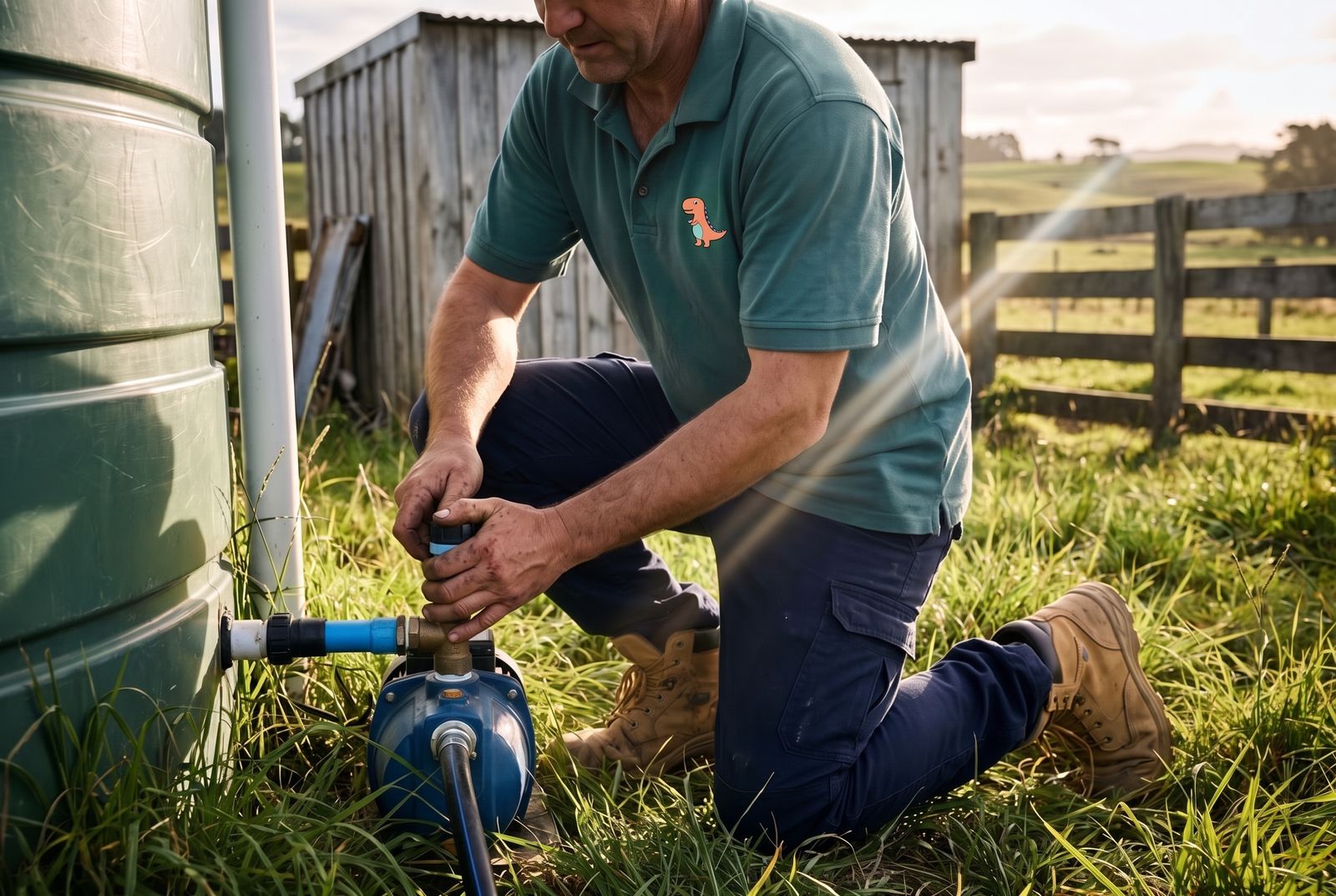
Water Tanks
Rainwater tank installation, pump setup and maintenance for rural and urban properties across the Wellington region.
View serviceWater Tank Cleaning
Sludge settles in every rainwater tank.
View service
Hot Water Cylinders
Hot water cylinder replacement across Wellington.
View serviceRead Next
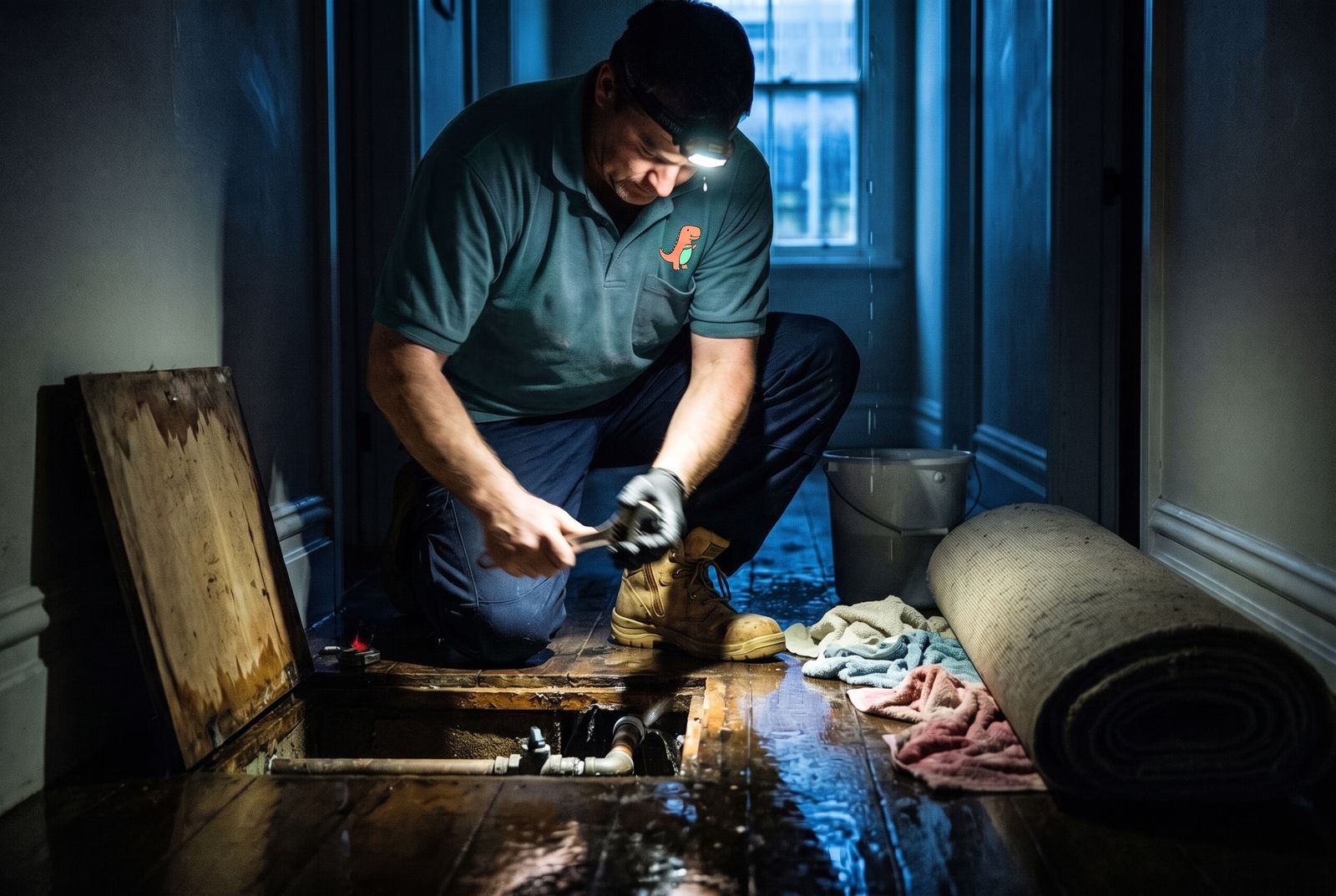
After an Earthquake: Checking Your Pipes, Drains and Gas in Wellington
Once everyone is safe, check for the smell or hiss of gas, look for water leaks, and do not flush toilets until you...
Read article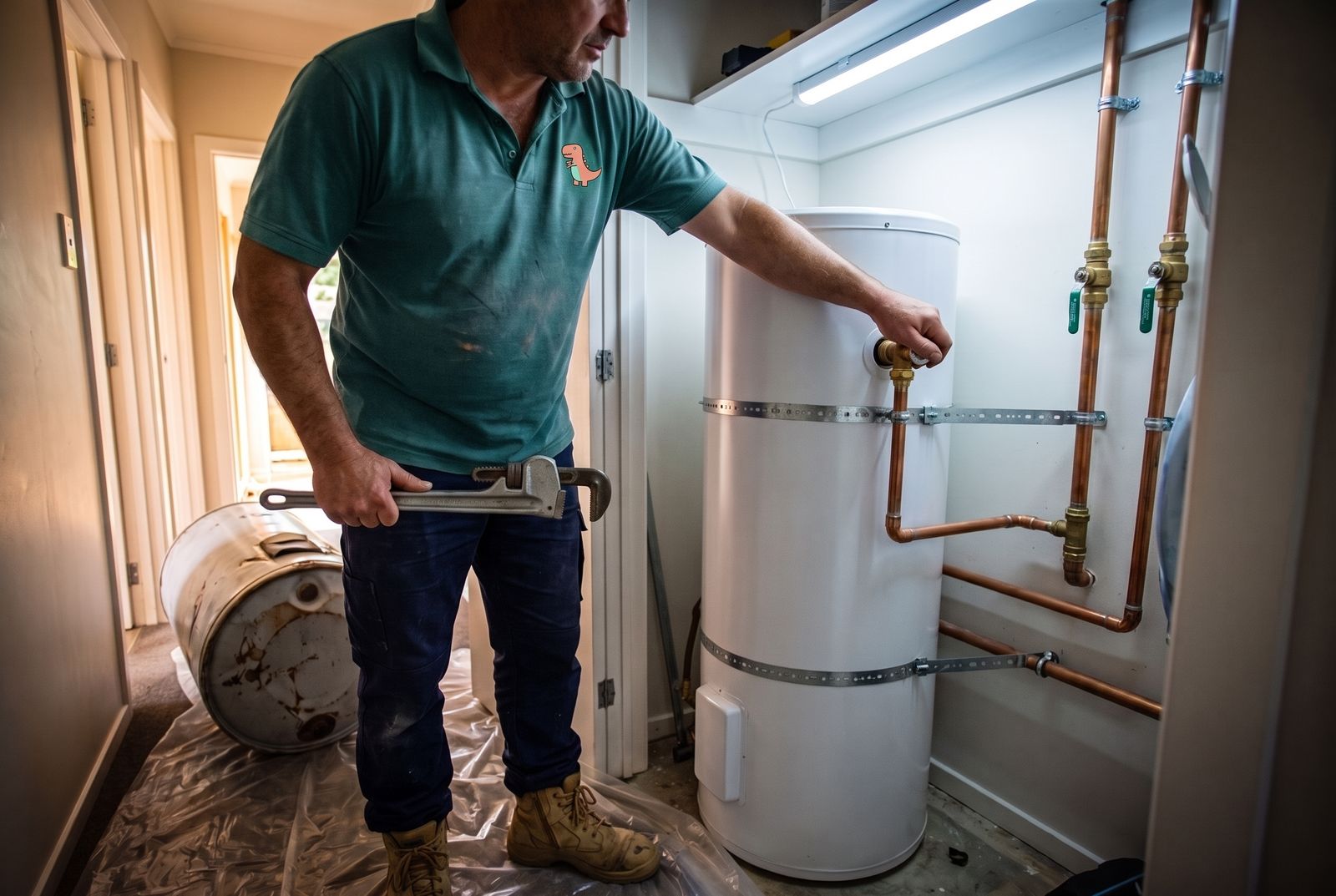
Hot Water Cylinder Seismic Restraints: Is Yours Ready for a Wellington Quake?
Yes. Under the Building Code, a storage hot water cylinder has to be held against earthquake movement, and Acceptable...
Read article
Wellington Water Restrictions: What Level 1 Means for Your Garden and Hose
Level 1 is the normal summer setting in the Tiaki Wai area. Sprinklers and irrigation may run only on alternate days,...
Read articleSources
More plumbing advice from the Cheeky's Plumbers team.
