
Many Wellington villas and cottages still have some original galvanised steel water pipe under the floor or in the walls. It corrodes from the inside, which causes low pressure, brown water and pinhole leaks. Because so many older Wellington houses sit on timber piles with a subfloor you can get under, replacing it is often simpler and less disruptive than owners expect.
Wellington's inner suburbs are full of colonial villas and workers' cottages on narrow hill sections. Te Ara notes that one builder, Harry Crump, built 156 houses in Mount Cook and Newtown between 1892 and 1908, and Heritage New Zealand describes Aro Valley's streetscape of workers' cottages and larger villas. Most of these homes have been renovated more than once, and the pipework under them usually shows it.
This guide explains how to tell what pipe you have, why old galvanised steel causes trouble, what brown water and weak flow are telling you, and how replacement works in a piled house.
How do I tell what pipes my house has?
Look under the house, around the hot water cylinder and where the supply pipe comes in from the toby. Galvanised steel is dull grey metal with threaded joints, copper is orange-brown and darkens or turns green with age, and modern plastic pipe is usually flexible and coloured.
A magnet helps: it sticks to galvanised steel but not to copper or plastic. Check in several places, because many older houses have a mix, with newer pipe to a renovated bathroom and original pipe elsewhere. In Mt Victoria, generations of alterations have left many houses with pipework that mixes old and new materials.
| Pipe | How it looks | What to know |
|---|---|---|
| Galvanised steel | Dull grey metal, threaded joints, rust at fittings | Original in many older homes; corrodes from the inside |
| Copper | Orange-brown, darkening or turning green with age | Durable, but acidic water or soil can corrode it |
| Polybutylene | Grey or black flexible plastic | Used from the late 1970s to the mid 1990s; one brand gained a reputation for failure |
| PEX and modern plastics | Flexible white, blue, red or grey pipe | The usual choice for a repipe today |
How long do galvanised pipes last?
There is no fixed lifespan, but galvanised pipe that dates from a house's early years is likely to be at the end of its life now. BRANZ's Renovate guidance for 1920s to 1940s bungalows says original pipes were typically galvanised steel, and that any still in place are likely to be in poor condition, mainly because internal corrosion restricts flow.
The zinc coating protects the steel for a time. Once it wears through, rust builds up inside the bore and narrows it, and the pipe wall thins until pinholes appear, often at threaded joints where the metal is thinnest.
Age is not the only clue. In Ngaio, colonial buildings, 1920s railway cottages and 1960s weatherboard houses share the same streets, and older homes there have often had pipework replaced in stages, so one house can hold several generations of pipe.
Water chemistry affects the rate. Tiaki Wai adjusts the pH of the supply to reduce its aggressiveness on pipework and tapware, which helps, but it cannot reverse decades of corrosion already inside an old pipe.
Why is my water brown or low pressure in an old house?
Usually because rust inside old galvanised pipe is coming loose and the bore has narrowed. Brown water that clears after a minute, weak flow at some taps but not others, and pressure that drops sharply when a second tap opens all point to corroded pipe.
Other causes are worth ruling out first: a toby that is partly closed, a faulty pressure-reducing valve, blocked tap aerators, or work on the street main stirring up sediment. If the water turns brown across the street at the same time, report it to Tiaki Wai on 0800 842 549.
Tiaki Wai also warns that water left standing in fittings for several hours can pick up traces of metals, including lead and copper, and suggests running a mugful from the tap each morning before drinking. That is sensible practice in any older home.
Our low water pressure service starts by measuring pressure at the toby and at the taps, which shows quickly whether the problem is in your pipes or in the supply.
Grey pipe under the floor?
Cheeky's Plumbers can check what you have, show you its condition and give you a fixed price for a staged or full repipe.
Can old pipes be replaced from under the house without opening walls?
Often yes, at least for the main runs. Many older Wellington houses stand on timber piles with a subfloor you can get into, so new pipe can be run under the floor and brought up to each fixture through small holes.
A Victoria University study of 80 Wellington dwellings looked at these piled subfloors, mainly for earthquake bracing, and BRANZ has tested foundation retrofits for pre-1960s piled houses on sloping sites near Wellington. On a hill section the subfloor is usually roomy on the low side and tight on the high side, so the route is planned around access.
Walls are another matter. Pipes inside old linings may need small openings, which can be patched afterwards. In Thorndon, Newtown and Mt Victoria, narrow side yards and street parking also mean planning access before the job starts.
Our repiping service maps the existing pipe first, then quotes a route that keeps wall and floor openings to a minimum.
Should pipes be replaced before a bathroom renovation?
Yes, if they are galvanised or of unknown age. With floors and walls already open, replacing the pipes to that room adds little to the job compared with opening up a finished bathroom later to chase a leak.
BRANZ's Renovate guidance also points out that converting a low-pressure hot water system to mains pressure, which often comes with a renovation, means checking that the existing pipes and fittings can handle the extra pressure. Old galvanised joints are an obvious weak point.
Think beyond the room as well. A new bathroom fed by a corroded supply pipe from the toby will still get weak flow. Our bathroom renovation plumbing team can replace the feed back to the main at the same time.
What should I do if old pipe starts leaking?
Fix the leak, then look at the pipe on either side of it. A pinhole in old galvanised pipe is rarely the only weak spot, and once one joint goes, the next is often not far behind.
A leak detection visit confirms whether there are other leaks in the same run, and a quote for replacing that section, or the whole system, lets you decide how far to go. Cheeky's Plumbers gives you a fixed price before any work starts, so you can stage the work to suit your budget.
Many inner-city houses share the same story of original pipe patched over the decades. Our page for plumbers in Central Wellington covers local details for Te Aro, Thorndon, Mt Victoria, Newtown and Brooklyn.
Frequently Asked Questions
Is it worth replacing galvanised pipe that is not leaking?
If you have low pressure or brown water, yes, because those problems will not improve. If flow is fine, it is reasonable to plan replacement around other work, such as a bathroom or kitchen renovation, rather than wait for a leak.
Can I replace only part of the galvanised pipe?
Yes, and doing it in stages is common. Joining new pipe to old galvanised steel needs the right fittings to avoid corrosion where different metals meet. The main supply from the toby is often the first run to replace.
What pipe replaces galvanised steel?
Most repipes now use PEX or another modern plastic pipe, with copper where it suits exposed or hot sections. The choice depends on the run, access under the house and what the rest of the system is made of.
How do I know if my house has polybutylene pipe?
Look for grey or black flexible plastic pipe, common in homes built or replumbed from the late 1970s to the mid 1990s. Not all of it fails, but older joints and fittings are worth having checked.
Will repiping affect my hot water cylinder?
It can. A repipe is a good time to check the cylinder's valves and connections, and if you are moving from low pressure to mains pressure, the cylinder itself may need replacing as part of the job.
Our Services
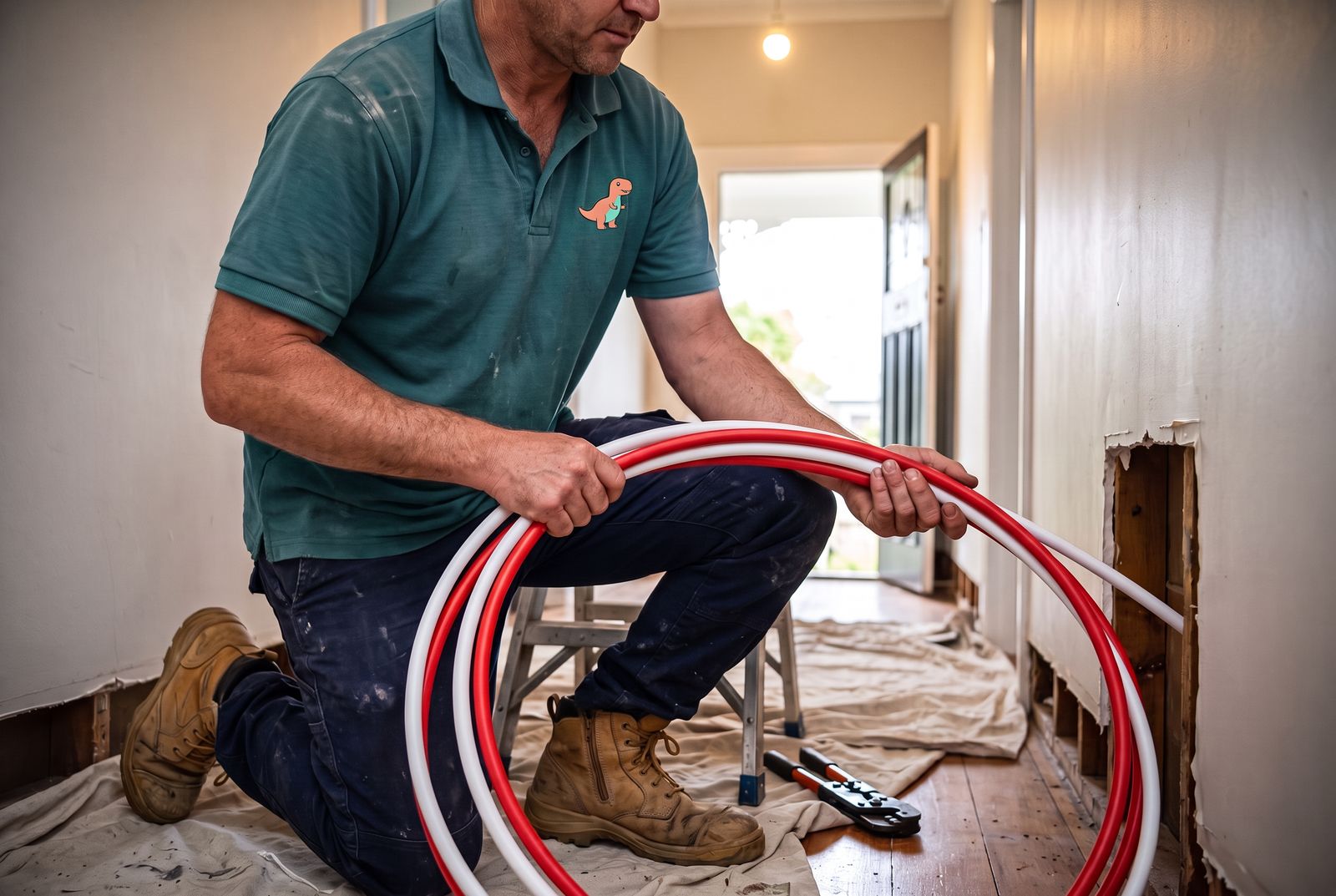
Repiping
Old galvanised steel and grey polybutylene pipes fail with age.
View service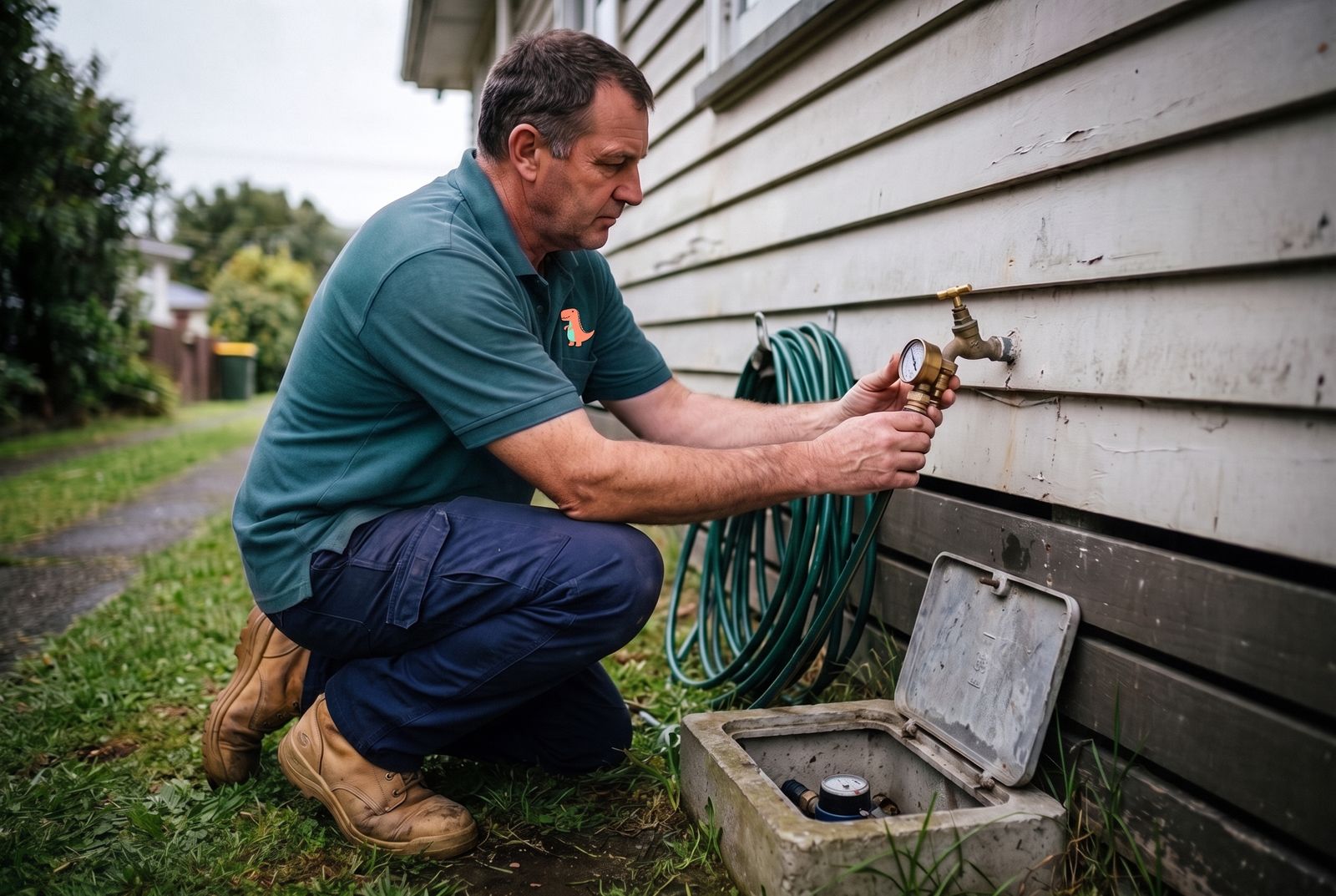
Low Water Pressure
Weak showers and slow-filling baths are usually caused by a failing pressure valve, a partly closed toby, scaled-up pipes or a hidden leak.
View service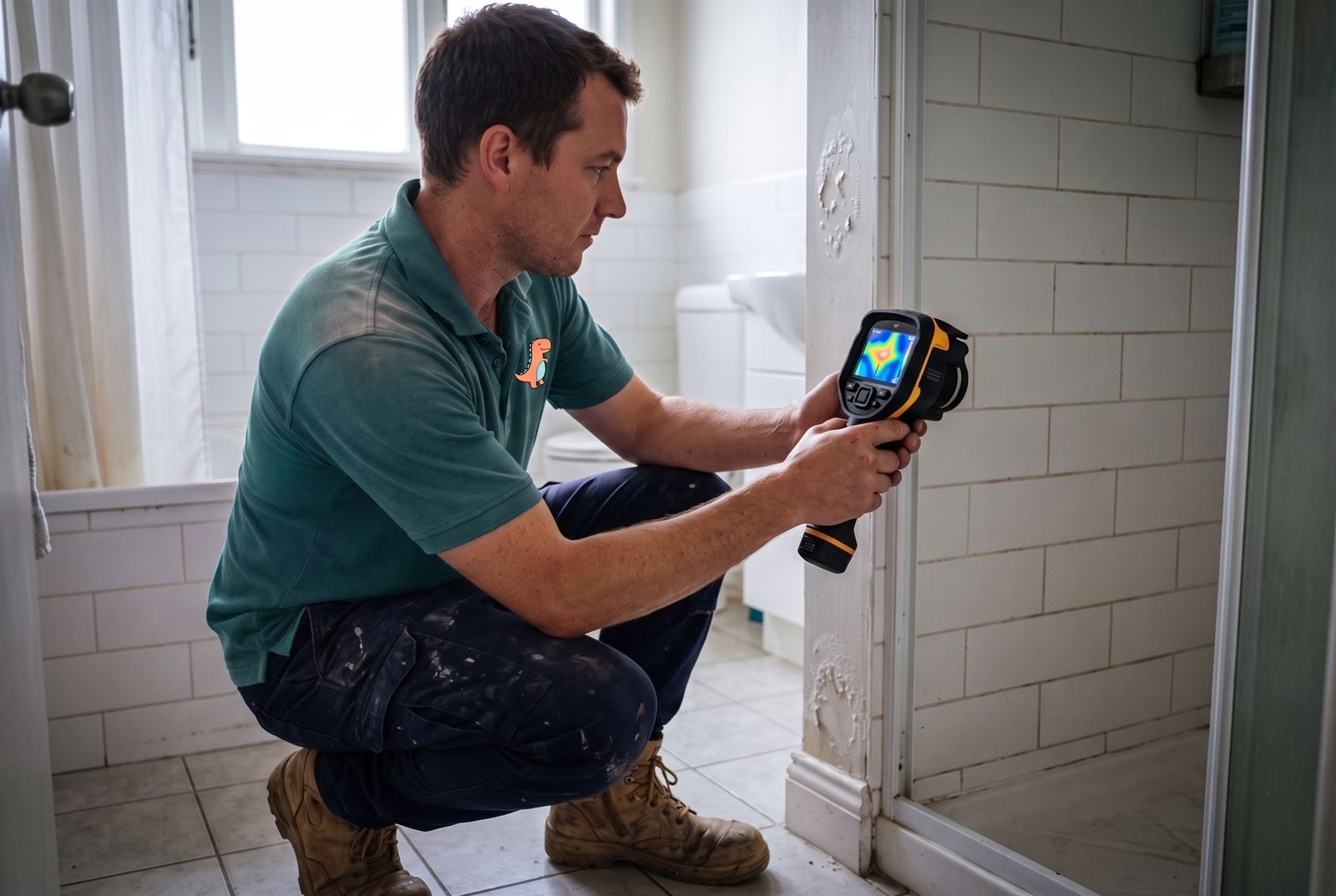
Leak Detection
A hidden leak can run day and night and quietly rot the framing behind your walls.
View serviceRead Next
How to Check Your Wellington Home for a Hidden Water Leak
Turn off every tap and water appliance, then look and listen. Most homes in Wellington City, the Hutt and Porirua have...
Read article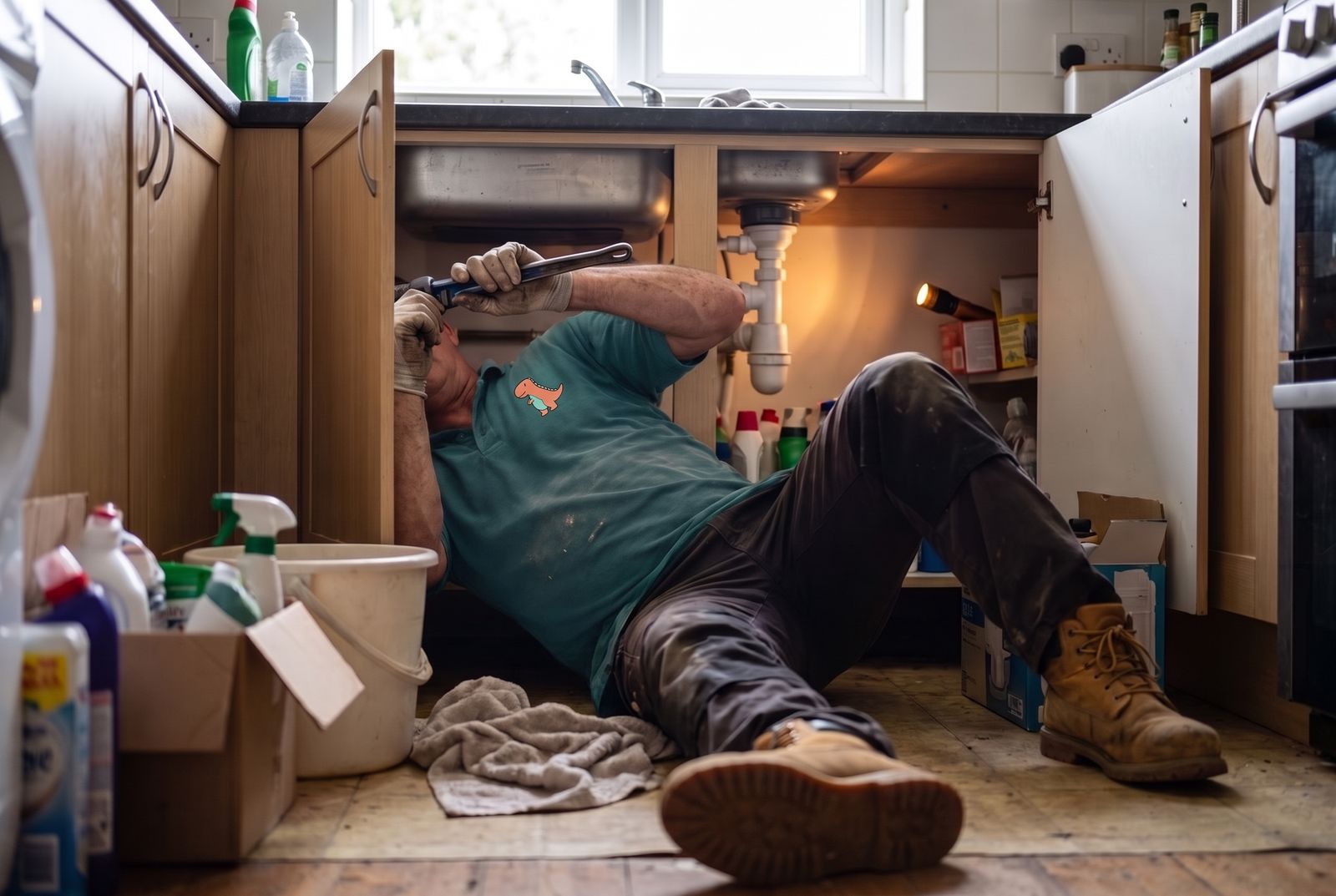
Is Wellington Water Hard or Soft? What It Means for Filters and Cylinders
Wellington's tap water is soft. Tiaki Wai classes water under 100 mg/L of calcium carbonate as soft, and the supply to...
Read article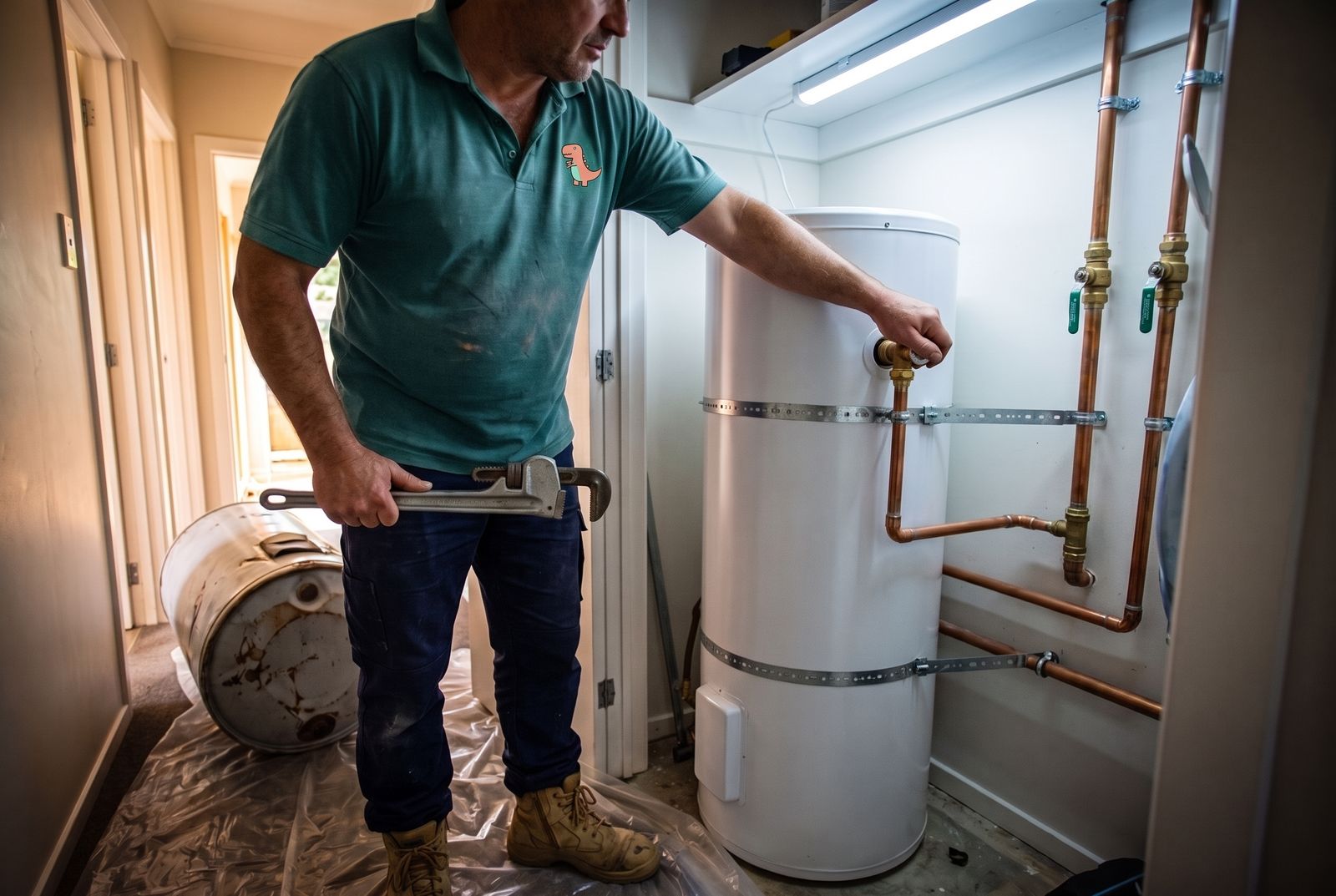
Hot Water Cylinder Seismic Restraints: Is Yours Ready for a Wellington Quake?
Yes. Under the Building Code, a storage hot water cylinder has to be held against earthquake movement, and Acceptable...
Read articleSources
More plumbing advice from the Cheeky's Plumbers team.
