
Turn off every tap and water appliance, then look and listen. Most homes in Wellington City, the Hutt and Porirua have no water meter, so you rely on sound at the toby, damp patches and a look under the floor. On the Kāpiti Coast every home is metered, so a meter dial that keeps moving with everything off is the quickest proof. Leaks on your side of the toby are yours to fix.
Tiaki Wai, which took over from Wellington Water on 1 July 2026, estimates that average water loss across its network was 37% in the 2025/26 year, and that figure includes leaks on private property as well as public mains. One slow drip under one house barely registers, but across a whole region it adds up.
For a homeowner the bigger worry is damage. A hidden leak can soften floor framing, feed mould and lift paint long before anyone sees a puddle. This guide covers the checks you can do yourself, how they differ between metered Kāpiti and the unmetered rest of the region, and when it is worth getting a plumber in.
How do I check for a leak if my house has no water meter?
Without a meter you find a leak by elimination: shut everything off, then look, listen and feel. Most homes in Wellington City, Lower Hutt, Upper Hutt and Porirua are unmetered, and Tiaki Wai says a smart meter rollout is still at the business case stage and would take five to seven years, so the classic meter test is not available to most households yet.
Pick a quiet time when nobody needs water. Turn off every tap, the washing machine, the dishwasher and any irrigation, then work through these checks, which follow the checklist Tiaki Wai gives residents:
- Check every tap, inside and outside, for drips.
- Look behind and under the dishwasher and washing machine for water marks.
- In dry weather, look for damp or unusually green strips in the lawn, garden or driveway along the line of the supply pipe.
- Listen inside the house for running water when nothing is turned on.
- Lift the toby lid at the boundary and listen. A steady hiss with every tap off suggests water is still moving through the pipe.
How do I use my water meter to find a leak in Kāpiti?
On the Kāpiti Coast the meter does the detective work for you. Kāpiti Coast District Council has metered every property since 2014 and charges a fixed amount plus a rate per cubic metre, so a leak shows up as water you pay for. The meter usually sits with the toby in a box with a blue lid near the front boundary.
Homes in Paraparaumu, Raumati and Waikanae are all on this system. If the dial will not stop and you cannot see why, our Kāpiti Coast plumbers can find the leak between the meter and the taps.
The council publishes a simple test:
- Turn off the taps and water appliances in the house.
- Look at the meter. If the dial is still moving, water is leaking somewhere.
- Close your house toby and look at the meter again.
- If the dial has stopped, the leak is inside the house or on the pipes to outside taps.
- If the dial keeps moving with the house toby closed, check the pipe between the house toby and the meter.
What are the signs of a leak under the house?
The usual signs are a damp or musty smell, wet soil or puddles under the floor, water stains on piles or bearers, and floors that feel soft near the bathroom or kitchen. Many older Wellington houses stand on timber piles with a subfloor you can get under, which makes this check far easier than in a house on a concrete slab.
If you can see water but not where it is coming from, our leak detection service can trace it before any floorboards come up.
In hill suburbs such as Karori and Brooklyn, older homes commonly sit on piles, and on a sloping section the subfloor is usually roomy on the low side and tight on the high side. Take a torch, start at the access hatch and work towards the wet rooms. Look for:
- Drips, or green and white crusting, at joints and fittings on the supply pipes.
- Wet patches in the soil directly under the bathroom, kitchen or laundry.
- Water stains or rot on piles, bearers and the underside of the floorboards.
- Rust staining on old galvanised pipe.
- A cylinder overflow or relief drain that runs all the time.
Think you have a hidden leak?
Cheeky's Plumbers can trace it, show you where it is and give you a fixed price to fix it before any work starts.
Is the leak mine or Tiaki Wai's to fix?
If the leak is on the house side of the toby, it is yours; if it is on the street side, it belongs to the network. Tiaki Wai describes the point of supply as the water toby in a plastic box under the ground, and says leaks on your property are the owner's responsibility to repair.
Wellington City's water bylaw splits the pipe the same way. The service pipe from the main to the point of supply belongs to the council and is now operated by Tiaki Wai. The supply pipe from the toby into the house is owned and maintained by the customer. The toby usually sits close to the boundary, often in the berm.
To report water bubbling up in the street, a leaking toby or a burst main, call Tiaki Wai on 0800 842 549 or use its online form. Its crews deal with the largest leaks first, so a small one at the toby may wait. On the Kāpiti Coast, report street leaks to Kāpiti Coast District Council instead.
A pipe that has split and is spraying under the house is a different matter. Close the toby and book a burst pipe repair straight away.
How much water can a running toilet or dripping tap waste?
More than most people expect. Kāpiti Coast District Council publishes these daily figures for common household leaks:
A running toilet can waste close to 100 litres a day on its own. To test a cistern, put a few drops of food colouring in the tank, wait 15 minutes without flushing, then look in the bowl. Colour in the bowl means the flush valve is letting water through.
Most of these are small fixes: a new washer or cartridge for a tap, or a flush valve seal or inlet valve for a toilet. Our tap and mixer repairs and toilet repairs cover both, and on a Kāpiti meter the repair pays back in water you no longer buy.
| Leak | Water lost per day |
|---|---|
| One drip a second | 14.4 litres |
| Two drips a second | 28.8 litres |
| Three drips a second | 43.2 litres |
| Five drips a second (a steady stream) | 72 litres |
| Running toilet | 96.5 litres |
| Badly leaking toilet | 201.6 litres |
When is it time to call in a plumber?
Call a plumber when the simple checks point to a leak you cannot see, when you find water under the house, or when a Kāpiti meter keeps moving with everything off. Tiaki Wai gives residents the same advice: if you discover or suspect a leak on your property, get a registered plumber to fix it.
Cheeky's Plumbers starts with the same elimination tests, then traces the leak to a particular wall, floor or buried run before anything is opened up. You get a fixed price for the repair before work starts, so there are no surprises once the floor is lifted.
If the leak is on a long buried supply pipe that has already been patched more than once, replacing that run can work out better than another repair. You can book online and pick a time that suits.
Frequently Asked Questions
Will a leak put up my water bill in Wellington?
In most of Wellington City, the Hutt and Porirua, homes are not metered, so a leak does not change the water charge the way it would on a meter. Customers are moving to paying Tiaki Wai directly instead of through rates, and 2026/27 charges are expected to be in line with what households paid before. In Kāpiti, a leak does show up on the bill.
Can the council reduce my Kāpiti bill after a hidden leak?
Kāpiti Coast District Council may reassess the volumetric part of your water rates if you find and repair a leak on your private supply pipe before the next invoice. It does not reassess charges caused by visible leaks such as toilets, taps, showers or hot water cylinders.
How do I find my toby?
Look along the front boundary for a small lid, usually in the berm or near the driveway. In Kāpiti it is inside the blue-lidded box with the meter, and the council can locate it for you if you cannot find it. Know where it is before you need it.
Is a wet patch on the lawn always a water leak?
No. In winter it is often stormwater or a blocked drain. A patch that stays wet through a dry spell, follows the line of the supply pipe or keeps growing is more likely to be a leak on the pressurised water pipe.
Should I turn the water off at the toby if I find a leak?
If water is spraying or pooling, yes. Turn the toby clockwise to close it, then call a plumber. For a slow drip you can usually leave the water on until the repair is booked, as long as you keep an eye on it.
Our Services
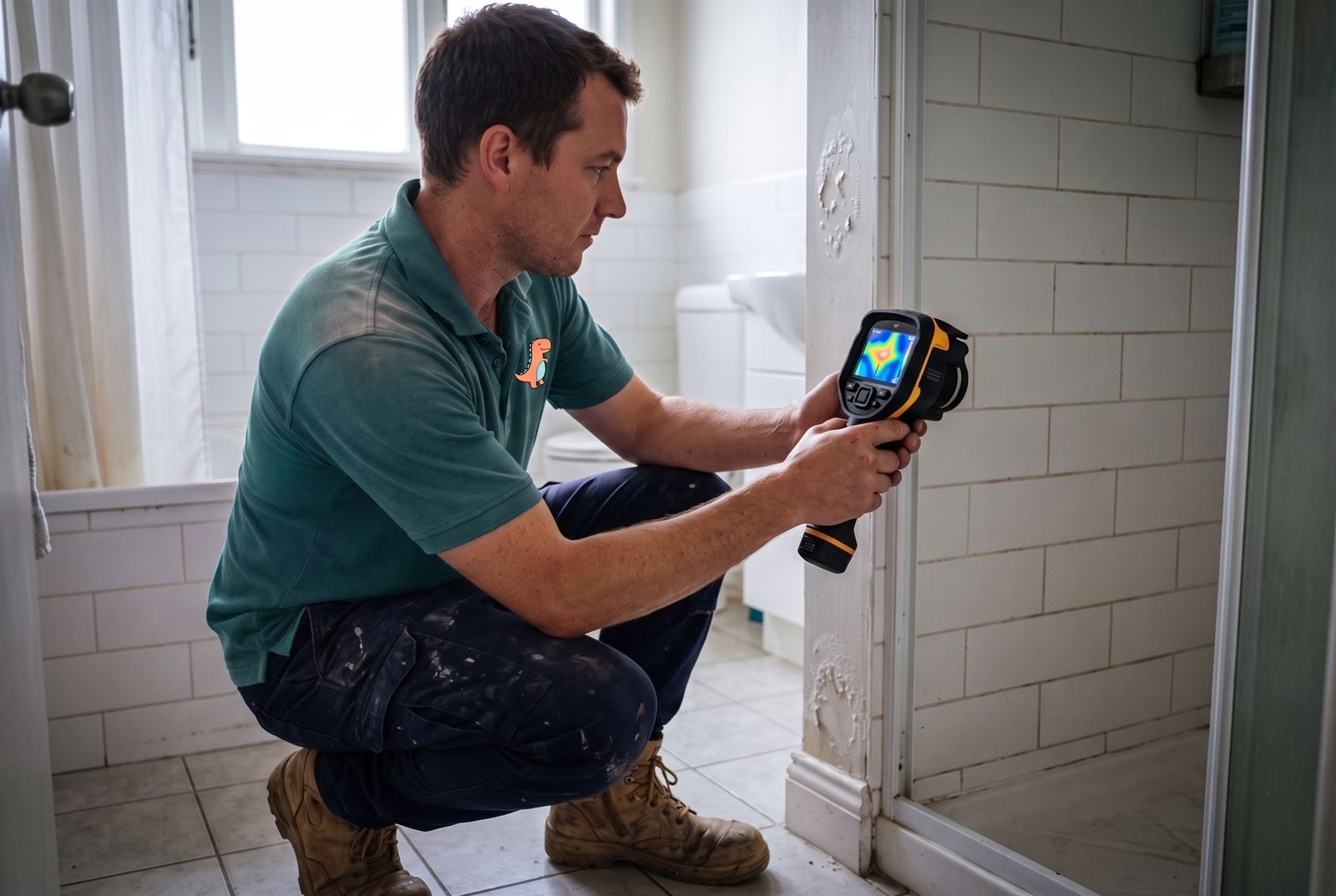
Leak Detection
A hidden leak can run day and night and quietly rot the framing behind your walls.
View service
Toilet Repairs
Running toilets, leaking cisterns, blocked pans and wobbly bases fixed fast.
View service
Tap & Mixer Repairs
Dripping taps, stiff mixers and leaking spouts repaired or replaced.
View serviceRead Next
Tiaki Wai Explained: What Changed for Wellington Homeowners in 2026
Tiaki Wai is the council-owned water company that took over from Wellington Water on 1 July 2026. It runs drinking...
Read article
Who Is Responsible for Water and Sewer Pipes on a Wellington Property?
On a Wellington property the owner is responsible for the water supply pipe from the toby to the house, and Tiaki Wai...
Read article
Old Pipes Under Wellington Villas: Galvanised Steel, Copper and When to Replace
Many Wellington villas and cottages still have some original galvanised steel water pipe under the floor or in the...
Read articleSources
More plumbing advice from the Cheeky's Plumbers team.
